
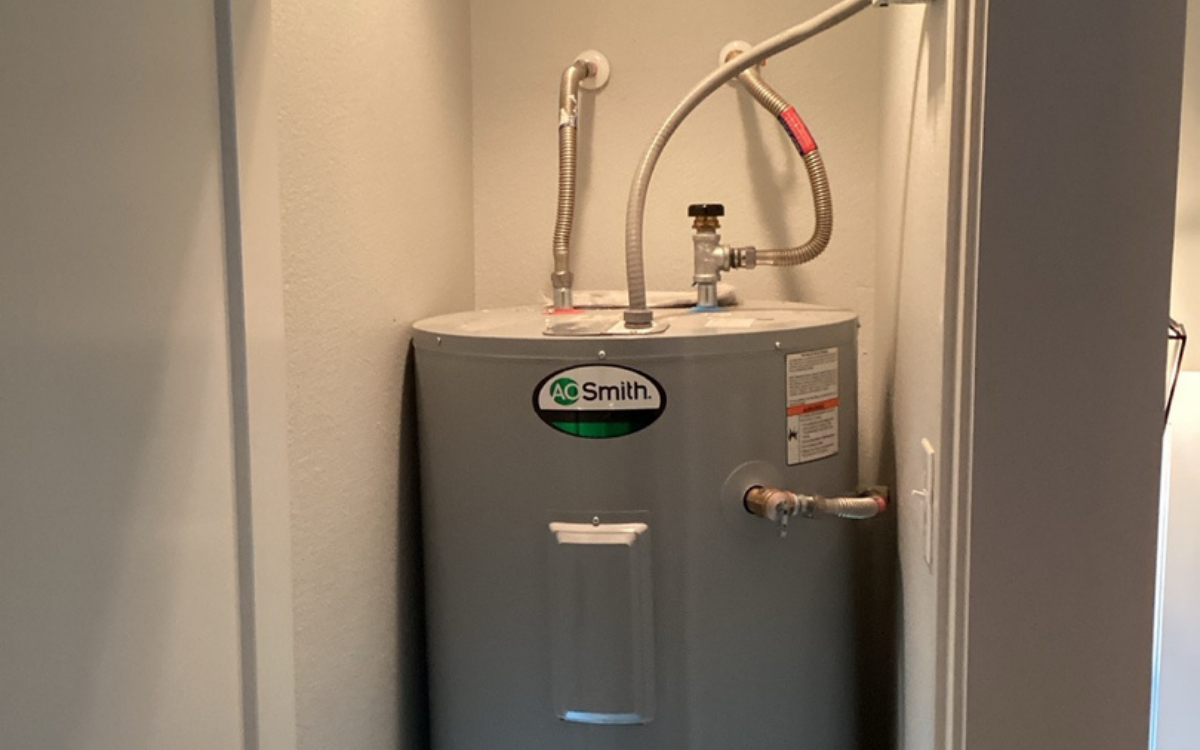

Why Is My Water Heater Leaking? What to Do Right Now
A water heater leaking can quickly go from a small puddle to a problem that needs immediate attention. Whether you notice moisture around the base of the tank, dripping from a connection near the top, or a steady flow of water, the first priority is protecting your home and figuring out where the leak is coming from.
Some water heater leaks can be repaired, while others may indicate that the tank itself is failing. Here is what San Antonio homeowners should do when they discover a leak and when it is time to call a professional.
What Should You Do If Your Water Heater Is Leaking?
If you find water around your water heater, don’t ignore it. Even a small leak can cause damage if it continues.
If you can safely do so:
- Avoid standing in or touching pooled water, especially if it is near electrical components.
- Shut off the water supply to the water heater if you know how to do so safely.
- If necessary, turn off the energy source to the unit using the appropriate shutoff for your system.
- Move belongings away from the surrounding area to help protect them from water damage.
- Call a professional plumber to determine where the leak is coming from.
If you are unsure how to safely shut down the equipment, avoid attempting repairs yourself and contact a professional.

Why Is My Water Heater Leaking?
A water heater leaking does not always mean the entire system has failed. Water can escape from several different components, and the location of the leak can provide clues about what is happening.
Common causes include loose plumbing connections, failing valves, excessive pressure, corrosion, and damage to the tank itself.
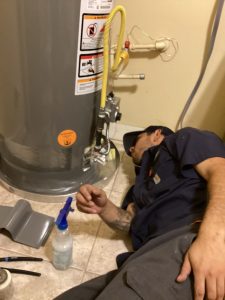
The important thing is determining whether you’re dealing with a replaceable component or a problem with the tank.
Water Heater Leaking From the Top
A water heater leaking from top connections may have an issue with the plumbing entering or leaving the tank.
Potential sources can include:
- Loose inlet or outlet connections
- Damaged fittings
- Leaking valves
- Corrosion around connections
- Water traveling from another nearby source
Water naturally travels downward, so a puddle at the bottom does not necessarily mean the tank itself is leaking. Checking where the moisture begins can help identify the actual source.
A professional plumber can inspect the connections and determine whether the affected component can be repaired or replaced.
Water Heater Leaking From the Bottom
A water heater leaking from the bottom is especially important to have inspected.
Sometimes the source is a drain valve or another repairable component near the bottom of the unit. In other cases, water around the base can indicate that the storage tank itself has corroded and begun leaking.
If the tank has failed, replacing an individual component will not solve the problem. A leaking tank generally requires water heater replacement.
Because water from a higher connection can also run down the side of the tank and collect underneath it, don’t assume the tank has failed based solely on where you see the puddle.
Could the Pressure Relief Valve Be Leaking?
The temperature and pressure relief valve, often called the T&P valve, is an important safety component on a tank-style water heater.
If temperature or pressure inside the tank becomes too high, the valve is designed to release water. Water coming from this area could indicate an issue with the valve or conditions inside the system that need to be evaluated.
Do not plug, cap, or disable a leaking relief valve. Because it is a safety device, problems involving the T&P valve should be inspected by a professional.
Can a Leaking Water Heater Be Repaired?
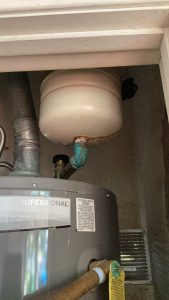
Sometimes.
If the leak is coming from a connection, valve, or another serviceable component, water heater repair may be possible.
If the tank itself is leaking because of internal corrosion or deterioration, replacement is generally necessary. Storage tanks are not designed to be repaired once the tank has developed a leak.
Other factors can influence the repair-versus-replacement decision, including:
- Age of the water heater
- Overall equipment condition
- Location of the leak
- Previous repair history
- Extent of corrosion
- Cost and practicality of the repair
At Shafer Services Plus, our approach is to diagnose the problem first. If your water heater can be repaired safely and reliably, we’ll explain that option rather than automatically recommending replacement.
Why You Shouldn’t Ignore a Small Water Heater Leak
A few drops of water may not seem urgent, but plumbing leaks rarely improve on their own.
A water heater leaking water can potentially damage flooring, drywall, cabinetry, and belongings around the equipment. A small leak can also worsen depending on its cause.
Pay particular attention if:
- The amount of water is increasing
- Water continues collecting around the tank
- You notice visible corrosion
- Hot water performance has changed
- The unit is making unusual noises
- The leak returns after the area has been dried
Addressing the problem early gives you an opportunity to determine what’s wrong before additional damage occurs.
Is It Normal for a Water Heater to Have Water Around It?
No. Water around the unit should be investigated, but the water heater itself may not always be the source.
Condensation, nearby plumbing, drain lines, or another appliance could sometimes create moisture in the same area.
Drying the area and looking for where new water first appears may help narrow down the source. If you cannot identify it, a plumber can determine whether the water heater or another part of the plumbing system is responsible.
When Should You Call a Plumber?
If you can clearly see that your water heater is leaking, professional service is usually the safest next step.
Call a plumber when:
- Water is actively leaking from the tank or its connections
- You cannot determine where the water is coming from
- The leak continues after basic shutoff steps
- The T&P valve is releasing water
- There is visible corrosion around the tank
- Water is spreading into surrounding areas
- You suspect the tank itself has failed
If you’re searching for help with a water heater leak in San Antonio, acting quickly can help limit water damage and give you a clearer idea of whether the system can be repaired.
What Happens If the Water Heater Needs to Be Replaced?
Finding a leak does not automatically mean you need a new water heater. But if an inspection confirms that the storage tank itself has failed, your plumber can help you understand your replacement options.
The right replacement will depend on factors such as household hot water demand, available space, fuel source, and whether you want to stay with a traditional tank or consider a tankless system.
If you’re researching the financial side of that decision, our Water Heater Replacement Cost in San Antonio: What to Expect explains the factors that can affect replacement and installation costs.
The goal should be to understand your options clearly rather than making a rushed decision simply because you have a leak.
Final Thoughts
Finding a water heater leaking can be stressful, but the source of the water makes a big difference in what happens next. Some leaks come from repairable connections or components, while a leaking tank may signal that it’s time for replacement.
Shafer Services Plus can diagnose where the water is coming from, explain what we find, and help you understand your options. Whether the right solution is a repair or a new water heater, you’ll get clear information so you can make the right decision for your home.
When water is actively leaking, getting professional help quickly can help protect your home and restore your peace of mind.